Volume 7. Notes from the Room.
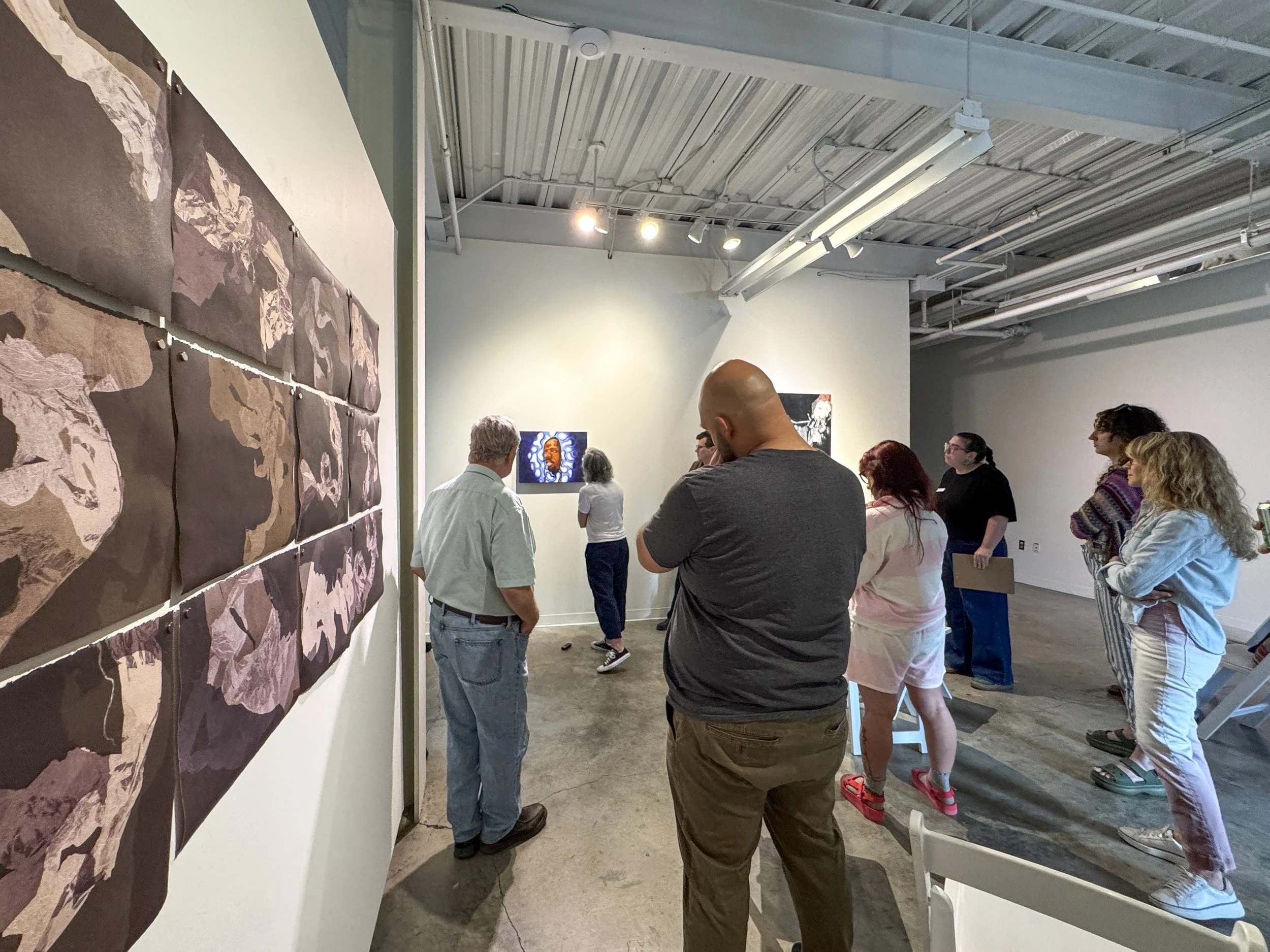
The most recent Comment Thread covered a lot of ground: collage, monotype, sculpture, paintings, video, and dimensional wall-based work. The pieces looked nothing alike, but a handful of things kept coming up across all of them. Here are a few takeaways.
Does the form do what the idea claims?
One artist described work about forces that connect and run through everything, energy moving between things that look unrelated. In the piece, though, those elements stayed in their own separate areas, and the room could feel the gap between the idea and what the piece was doing. If the idea is that things merge, viewers expect to watch them merge. A concept can be fully present in the ingredients of a work and still be missing from the way the work behaves. Check whether your composition does the thing your idea says it does, or only assembles the parts of it.
Two things with the same surface read as one thing.
When two parts of a piece share the same finish, viewers tend to read them as the same kind of thing, even when you mean them to be different. In one painting a realistic portrait and a field of abstract shapes had an identical smooth surface, and the room kept straining to tell them apart. Someone called it using the wrong font: nothing was technically wrong, but the matching surface quietly filed two unrelated things into the same category. The fix could be to add more detail, but it could also be a change in texture, finish, or edge.
When everything is resolved, the room wants you to risk something.
Several artists brought work of obvious technical control, and in more than one case the room admired the craft but felt a longing for something more. Very clean, very resolved work can start to feel impersonal, like it could have been made by anyone, or by a machine. The pieces people connected with were often where they could feel a person deciding: a spot that did not quite resolve, a section that got stranger than the rest.
What a piece gives at a glance is not what it gives up close.
Across very different work, the same pattern held: the experience changed with distance. From across the room, a piece might read as a single mood or image, and from a foot away, it became something else, its method, its texture, its small surprises. Viewers moved around, leaned in, stepped back, even knelt down, and what they found at each distance was part of the work. The two reads do not have to match. What matters is that you chose both, instead of only designing the one you happen to stand closest to while you make it.
