Volume 5. Notes from the Room.
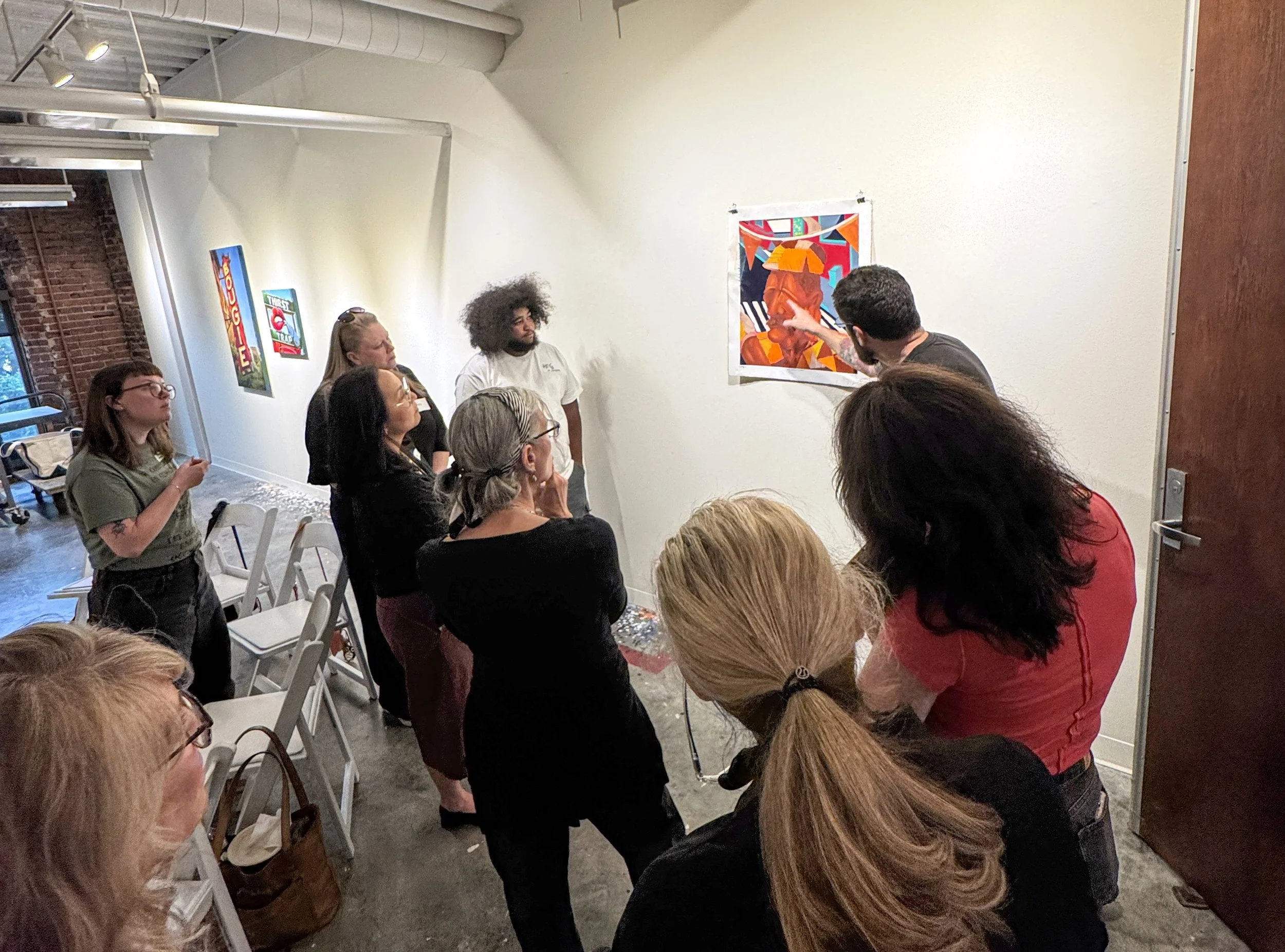
A lot of what came up in this session was specific to what a room gives you that working alone doesn't. Here are four things worth considering in your practice:
What you know might get in the way of what you see.
One artist had a rich narrative driving their piece. The room loved the work and missed the story entirely. They wouldn't have known that without the critique. You can't see that gap from inside it.
Fresh eyes hand you something you might never find yourself.
One artist left this session with a specific technique she'd never considered — applying varnish selectively to certain areas of a painting rather than the whole surface. She was visibly excited about it. That idea didn't come from research or experimentation. It came from someone standing in front of her work, and seeing a possibility she couldn't see from behind it.
The thing you're most worried about might not be what anyone else sees.
At the end of one critique, the artist said she had concerns about the piece that the room hadn't addressed, and she wasn't going to bring them up. Which is good. The spot you've been losing sleep over is often invisible to everyone else. But you need other people to tell you that - you can’t necessarily talk yourself into believing it.
The criticism you've carried the longest might be pointing at your strength.
At the start of every session, artists are reminded: take what's meaningful, leave what isn't, sit with what's unresolved. It's easy to say and hard to do, especially with criticism you've been carrying for years. One artist had been told to loosen up since undergrad. In this session, many years out of school, that tightness was exactly what people responded to in her work. You get to decide what’s useful.
