Volume 2. Notes from the Room.
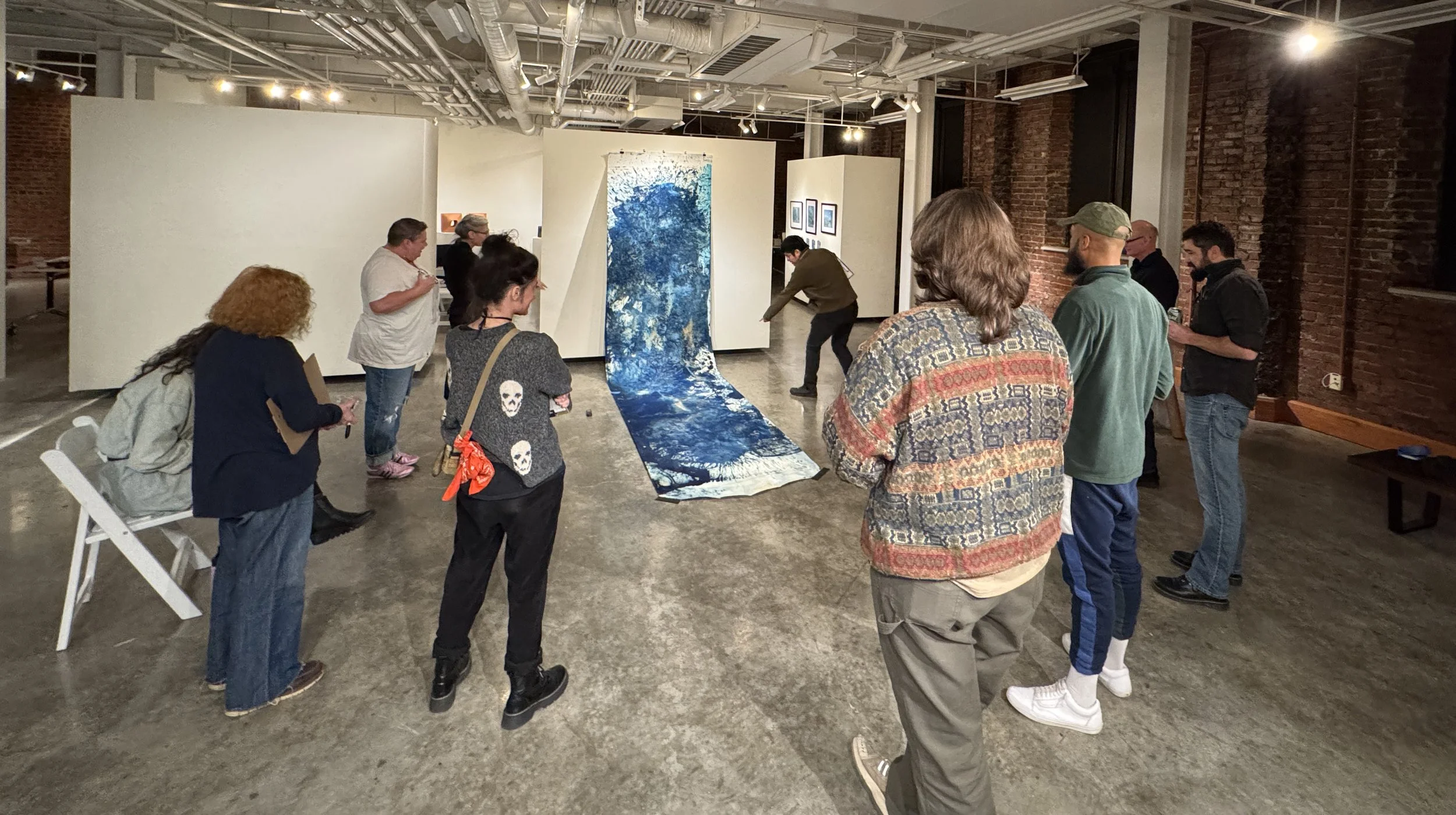
Comment Thread brings artists together to talk honestly about their work. Not just the finished pieces, but the decisions behind them, the materials, the presentation, and where the work might go next. After enough of these sessions, certain ideas keep coming up. Not as rules, but as reminders worth considering.
Skill is the starting point, not the finish line.
Technical ability earns you the right to be seen. It signals care, commitment, and time. But the question that follows is always the same: now that you can do this, where are you taking us? The work that lands is the work where technique and intention are pulling in the same direction.
The best work makes you say both "wow" and "how."
Wow is the gut response. How is the one that keeps you standing there. If a piece can trigger both at the same time, that is when something real is happening. It is a useful test to apply before you put work in front of anyone.
Mystery is doing more work than you think.
There is a temptation to explain your work, either through the piece itself or through how you talk about it. But viewers want to discover something. The work that generates the most conversation is almost always the work that withholds a little. Not everything needs to be resolved.
Presentation is part of the work.
The frame, the pedestal, the wall color, the way a piece hangs or stands. All of it shapes how the work is received before anyone even really looks at it. Artists often treat display as an afterthought. It is not.
Think in series.
One object can be strong. A group of objects in conversation with each other can be something else entirely. Almost every artist in a critique gets pushed toward this at some point. How does the work grow? What happens when there are more of them?
A critique tells you what is actually in the work.
You will hear what you put into the piece, not what you thought you put in. Those two things are sometimes the same, and often they are not. Both are useful to know.
