Volume 8. Notes from the Room.
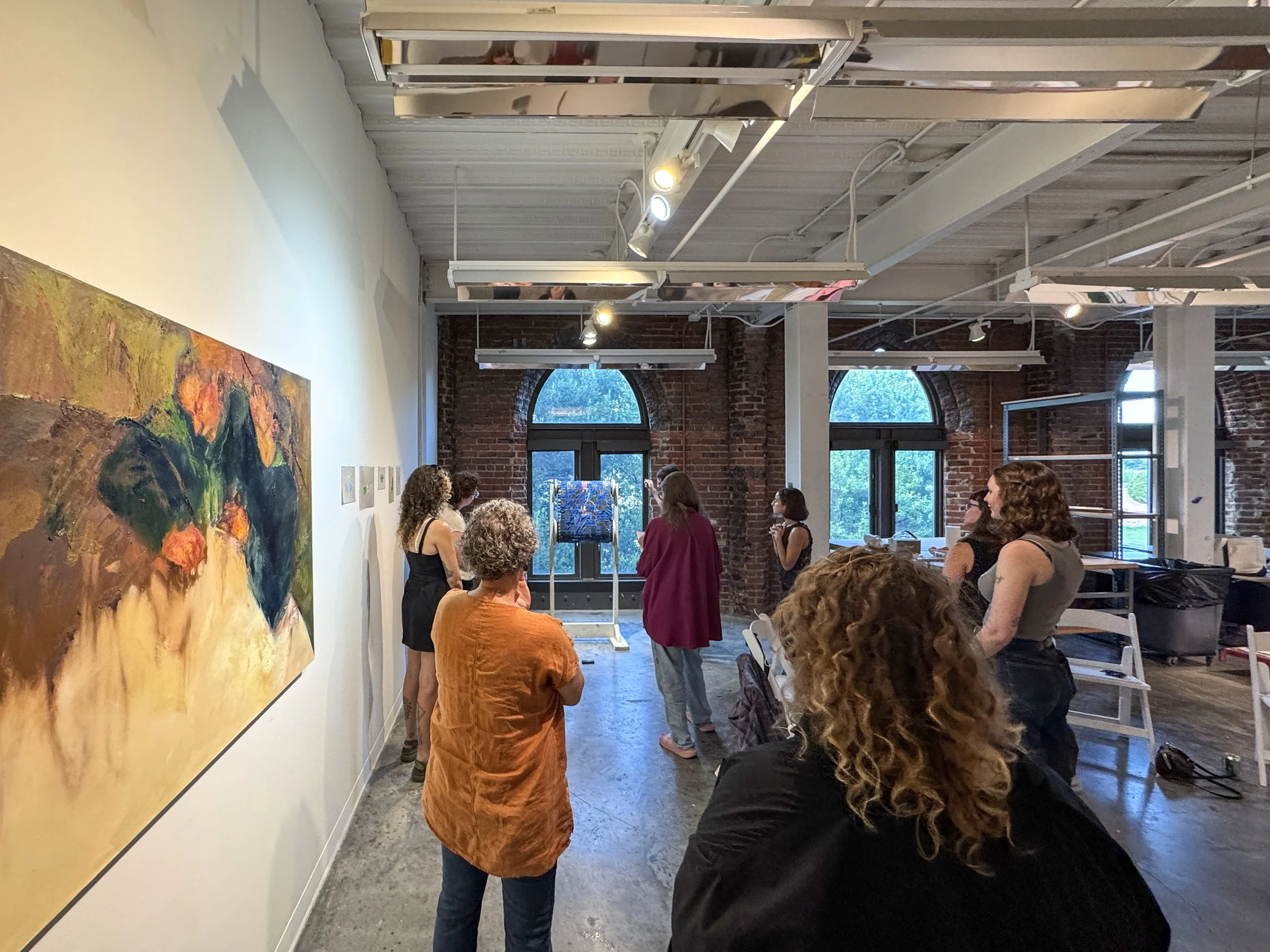
A lot of the most recent Comment Thread came down to how the work was made: the marks, the materials, and what each artist chose to add or take away. Several people were also working in territory that was new to them, which gave the session an honest, figuring-it-out feeling. Here are four worth bringing back to the studio.
Trust the choice once you have made it.
A few artists this session were working in new territory, whether a new medium or a new direction, and you could feel the places where someone was still deciding whether a choice was the right one. That uncertainty is a normal part of finding your footing, and some of it simply comes with a piece that is still in progress. It does tend to show on the surface, though. A color or a shape you fully believe in comes across as confident even when it is unexpected, while one you are quietly unsure of reads as tentative no matter how carefully you handle it. So once you have landed on something, you can usually trust it and let it be.
Line a few things up, and people will read a story.
Several artists showed groups of pieces, or single works built from panels, and in every case the room started building a story out of the order: this one first, this leads to that, and around it goes. One artist had made her small pieces as separate one-offs, with no sequence in mind at all, and people still lined them up left to right and wrote a story connecting them. That is just what we do with anything set in a row. If you want people to take each piece on its own, a little more space between them goes a long way; otherwise, be prepared that the viewer might create a narrative.
Taking things away is also a way of making.
One painter described working both ways at once, adding paint and then lifting it back off, and told us the eraser mattered to her as much as the brush. Another built her surfaces by scrubbing material away, so that what showed through felt like memory. In both cases, the taking away was doing just as much as the putting in. We tend to think of making as adding more, but negative space, erased areas, and the parts you strip back are just as meaningful. So when a piece starts to feel heavy or overworked, consider a subtractive approach rather than an additive one.
Every material shows up with a mood of its own.
One artist wanted her pieces to feel celestial, something closer to the night sky, but she was building them from an earthy, matte material that absorbs light and reads more like the ground. The room's feedback was that the material's own character was pulling against the feeling she was after, and that no amount of effort would fully talk it out of being earthy. Materials arrive with a character already built in, whether earthy, industrial, precious, or soft. So when a piece is not giving you the feeling you are after, the problem is not always in how you are handling it. Sometimes the material is quietly working against you, and the kindest fix is to let it do what it does best, or to reach for a different one.
