Volume 10. Notes from the Room.
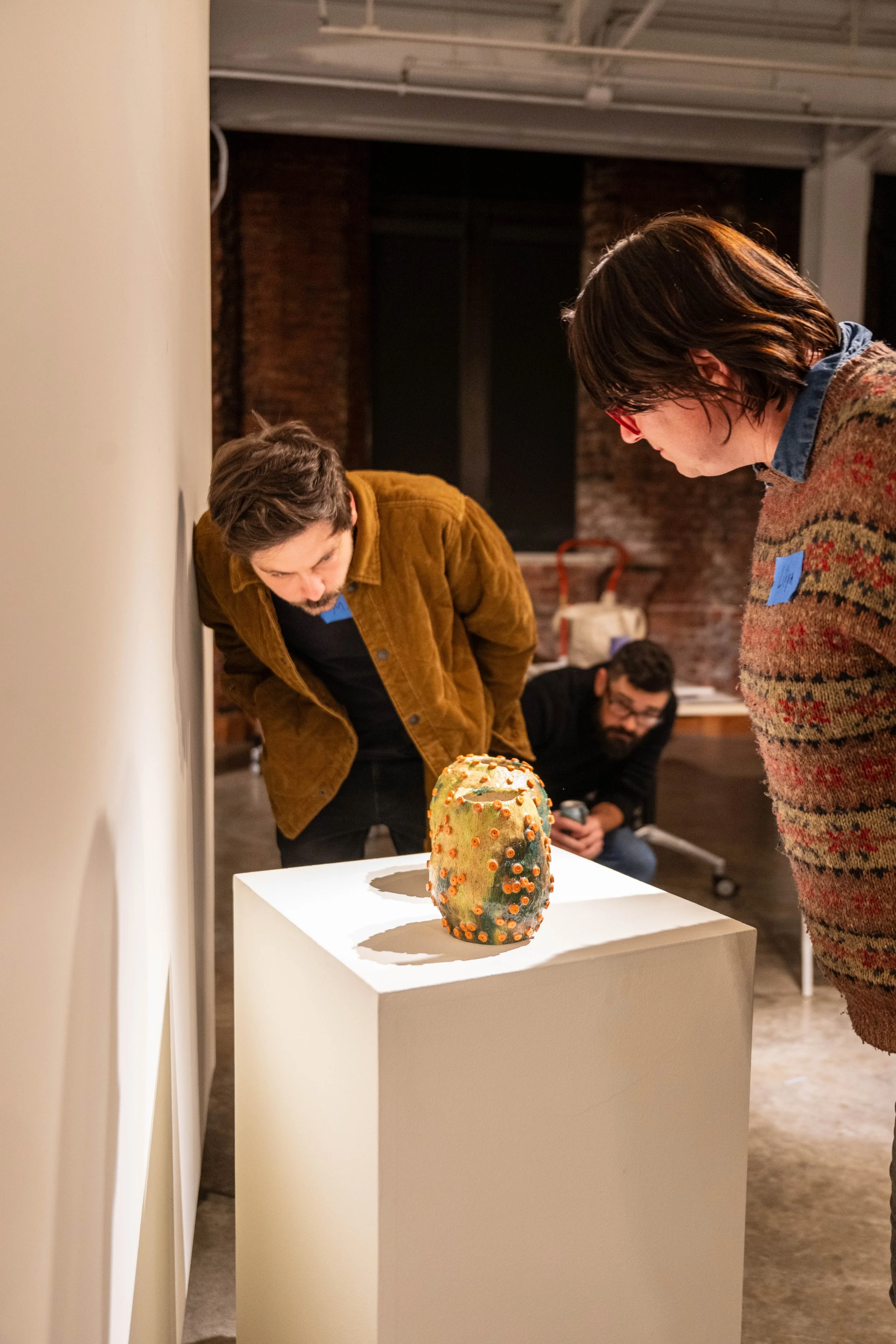
What a Year of Critiques Taught Us About Making Art
Artists spend months, sometimes years, looking at the same work. That familiarity is necessary to make it. It can also make it harder to see.
The mediums change. The work changes. The conversations are surprisingly consistent. Most artists arrive looking for feedback on a specific piece and leave with something broader: a clearer understanding of how their work is experienced by other people. And that gap can be surprisingly large.
An artist knows the ideas that led to a piece, the decisions that shaped it, and the problems it was trying to solve. A viewer encounters none of that. They only experience what is in front of them. Again and again, the sessions (by design) revealed how much work communicates on its own.
Sometimes viewers recognized themes, connections, and intentions that had never been explicitly explained. Just as often, they noticed things the artist did not expect: a title that pushed interpretation in a different direction, a material carrying associations the artist had not considered, or a small detail drawing more attention than intended.
The value of critique is not deciding whether those reactions are correct. The value is discovering that they exist.
One of the clearest patterns to emerge was that viewers do not separate content from presentation. Titles, materials, scale, framing, installation, and surface all shape how work is understood. Artists often think of these as supporting decisions. Viewers experience them as part of the work itself.
The sessions also challenged assumptions about certainty. Some of the richest conversations centered on work that was still unresolved. Pieces carrying open questions often generated more discussion than those that felt fully settled. In many cases, uncertainty was not a weakness. It was part of what made the work compelling.
The same was true of technical skill. Craft consistently earned admiration, but it was rarely the thing people talked about longest. What stayed with them was often a decision that felt unexpected, specific, or personal. Something that revealed the presence of a maker rather than simply the mastery of a process.
Perhaps that is because critique is not primarily about correction.
At its best, critique creates an opportunity to see work from outside your own familiarity with it. It reveals what is carried across, what is getting lost, and what is doing more work than you realized.
After a year of conversations, that remains the strongest argument for the process. Not that it tells artists what to make next, but that it helps them understand what they have already made.
For a work of art, that understanding is often the beginning of its life beyond the studio.
